The Battle of Qbaada took place in today's Krasnaya Polyana on 2 June [O.S. 21 May] 1864. It is widely accepted as the final military engagement of the Russo-Circassian War, as the Circassian people could no longer continue to resist the invading Imperial Russian Army.
A significant development in the wider Caucasian War, it was after the Battle of Qbaada that the Russian Empire annexed Circassia and initiated the Circassian genocide, in which 95% to 97% of the country's population was ethnically cleansed, leading to the creation of the Circassian diaspora.
Events
Battle
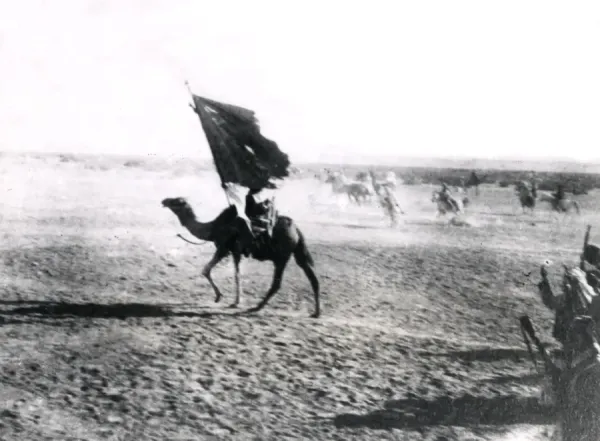
The Circassians gathered 20,000 men and women, mostly local villagers, Abreks, and tribal horsemen. The Imperial Russian Army advanced from four sides with 250,000 soldiers, mostly Cossacks and Russians. Circassian fighters attempted to break through the Russian lines, but were hit with artillery before they managed to reach the front, and were soon defeated by Russian infantry.
Aftermath
A military parade was held after the battle and 100 surviving Circassian warriors were publicly executed. Russian troops then continued raiding and torching Circassian villages, driving many of their inhabitants into the Black Sea and destroying much of the landscape to prevent them from returning. The ensuing Circassian genocide saw millions of Circassians and other Caucasians killed or expelled from Circassia and the rest of the Caucasus. Most of the deportees were sent to the Ottoman Empire, but many succumbed to injuries, disease, or starvation and exhaustion. The annexation of Circassia by the Russian Empire marked the end of the Caucasian War and thereby the Russian conquest of the Caucasus.
Notes
References